
Islamic Charity: The Complete Guide to Giving in Islam
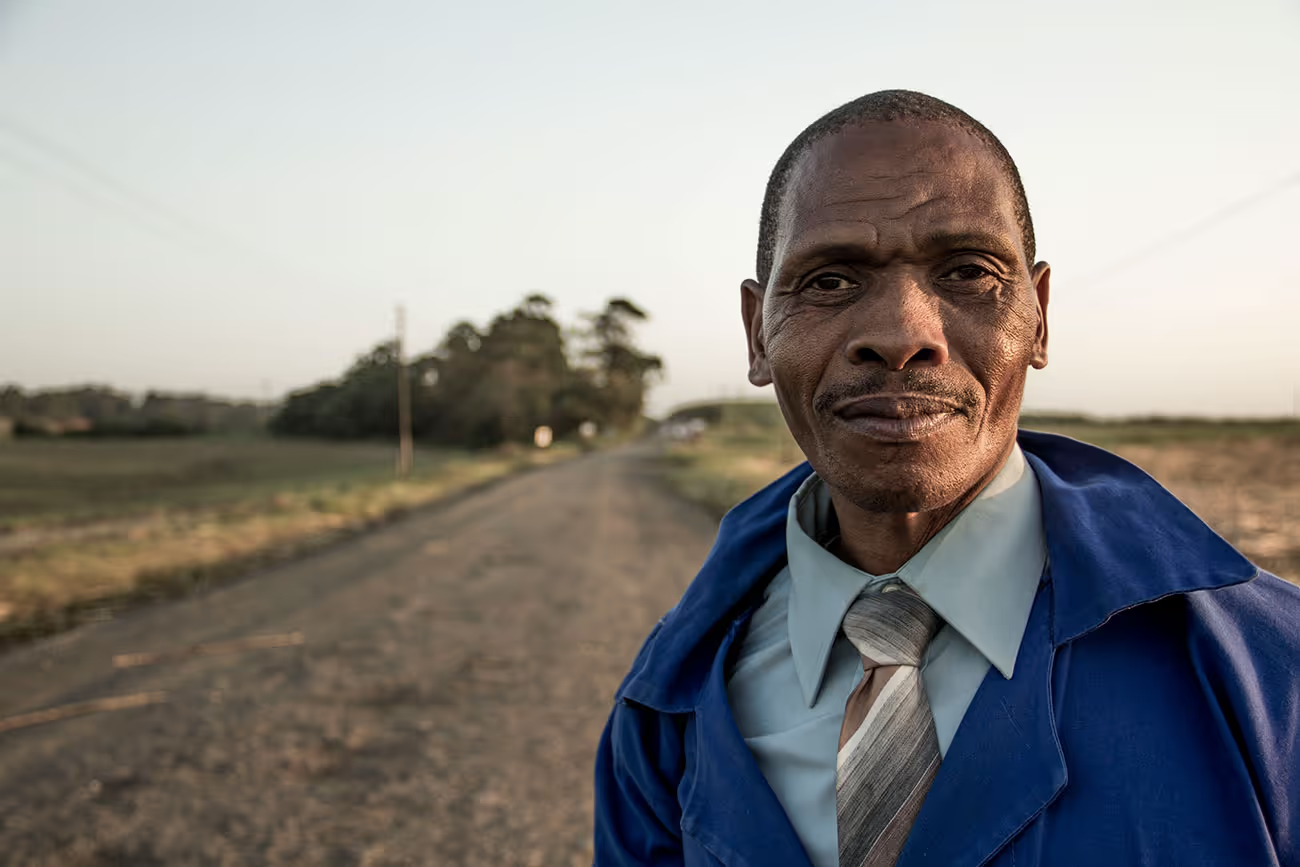
UMMA Farm Team

Charity as a Pillar of Faith
In Islam, giving is not optional — it's fundamental to faith. The Quran mentions charity alongside prayer more than 80 times. Generosity is described not as a nice-to-have but as a defining trait of the believer.
"You will never attain righteousness until you spend from that which you love." (Quran 3:92)
The Five Forms of Islamic Charity
1. Zakat (Obligatory Annual Charity)
The third pillar of Islam. 2.5% of your wealth above the nisab threshold, paid annually to specific categories of recipients.
- Who pays: Every Muslim with wealth above nisab
- How much: 2.5% of total zakatable assets
- When: Once per lunar year
- Recipients: 8 categories defined in Quran 9:60
2. Sadaqah (Voluntary Charity)
Any act of giving — money, time, a kind word, even a smile. There's no minimum, no deadline, no restriction on who receives it.
3. Sadaqah Jariyah (Ongoing Charity)
Charity that continues benefiting people after the initial gift. Building a well, planting a tree, funding education. The rewards accumulate continuously.
4. Waqf (Endowment)
A permanent charitable endowment — donating a productive asset whose income funds charity in perpetuity. Historically, waqf funded entire civilizations.
5. Zakat al-Fitr (Ramadan Obligation)
A small obligatory charity ($15-$20 per person) paid before Eid al-Fitr prayer, ensuring the poor can celebrate the holiday.
What Counts as Charity in Islam?
The Prophet (peace be upon him) described charity broadly:
- "Every good deed is charity." (Bukhari)
- "Even meeting your brother with a cheerful face is charity." (Tirmidhi)
- "Removing a harmful thing from the road is charity." (Bukhari)
Maximizing Your Charitable Impact
Strategic giving isn't just about how much — it's about how wisely:
- Choose sadaqah jariyah over one-time gifts when possible
- Verify organizations before donating (501c3 status, transparency)
- Give during multiplied times — Ramadan, Dhul Hijjah, Fridays
- Consider self-sustaining models like agricultural development
UMMA Farm campaigns combine multiple forms of charity: your contribution can qualify as zakat, function as sadaqah jariyah, and build toward a waqf-like endowment — all at once.