Is Planting a Tree Sadaqah Jariyah? Yes — And Here's Why It's One of the Best Forms
.webp)
UMMA Farm Team
Trees and Sadaqah Jariyah: A Direct Connection
One of the most frequently asked questions about Sadaqah Jariyah is: does planting a tree count?
The answer is unambiguously yes — and the evidence comes directly from the Prophet Muhammad ﷺ himself.
The Prophet ﷺ said: "If any Muslim plants a tree or sows seeds, and then a bird, or a person, or an animal eats from it, it is regarded as a charitable gift (Sadaqah) for him." (Sahih Bukhari, 2320)
This hadith establishes that every time anyone or anything benefits from a planted tree — for its entire lifespan — it counts as charity for the one who planted it. A palm tree that produces dates for 60 years generates 60 years of Sadaqah. A mango tree that feeds families for 40 years creates 40 years of continuous reward.
Why Trees Are Among the Best Sadaqah Jariyah
Not all Sadaqah Jariyah is equal in duration. Compare:
- A meal for someone in need: Immediate benefit, reward for one act
- A water well: Benefits for 5-15 years (with maintenance)
- A tree: Benefits for 40-80 years with minimal maintenance
- Agricultural infrastructure: Benefits for generations
Trees are among the longest-lasting forms of Sadaqah Jariyah because they are self-sustaining. Once a tree is established, it grows on its own. It produces fruit without being replanted. It provides shade, food, income, and environmental benefits — all from a single act of planting.
Moreover, trees create multiple forms of benefit simultaneously:
- Food for families (direct charity)
- Revenue from harvests (funding for relief)
- Shade and shelter (environmental benefit)
- Soil preservation (agricultural sustainability)
- Carbon capture (environmental stewardship)
UMMA Farm's Tree Planting Programs
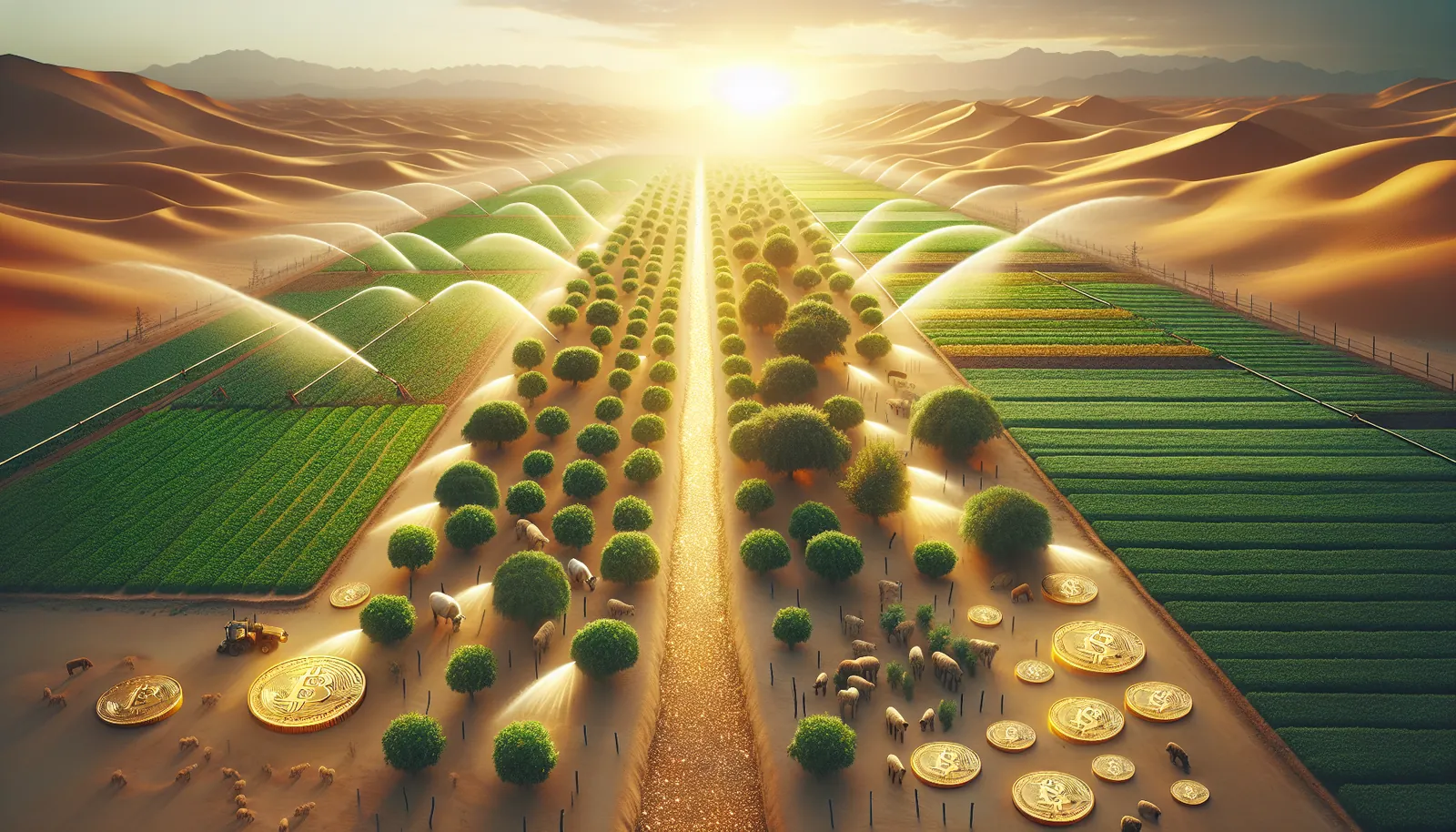
UMMA Farm's perennial tree program is designed specifically as Sadaqah Jariyah at scale:
Palm Trees (Block 1): 200 acres producing 1,560 tons of dates per year, with projected annual revenue of $1,325,000 by year 3. Palm trees produce for 60-80 years.
Mango Trees (Block 1): 200 acres producing 600 tons per year, with projected annual revenue of $2,295,000 by year 2. Mango trees produce for 40+ years.
When you contribute to a tree planting campaign, you're not planting a symbolic tree in a garden. You're funding a production block — hundreds of trees that will feed families and generate income for decades.
The Hadith Evidence for Farming as Charity
Beyond the tree-planting hadith, Islamic tradition is rich with evidence that agriculture is among the most beloved forms of charity:
The Prophet ﷺ said: "There is no Muslim who plants a tree or sows a field, and then a human, bird, or animal eats from it — except that it is counted as charity from him." (Muslim, 1553)
He ﷺ also said: "If the Hour (Day of Judgment) is about to be established and one of you has a palm shoot in his hand, and he is able to plant it before the Hour is established, let him plant it." (Musnad Ahmad)
This last hadith is remarkable — even at the end of time, the act of planting is so valued that the Prophet ﷺ encouraged it. The message is clear: planting is always worthwhile, always rewarded, always valuable.
Plant Your Sadaqah Jariyah Today
When you contribute to UMMA Farm's tree planting campaigns, every single tree becomes your Sadaqah Jariyah. Every fruit it produces. Every person it feeds. Every dollar of revenue that funds humanitarian relief.
And because UMMA Farm's trees are part of an integrated agricultural system — with irrigation, organic fertilizer from livestock, and professional management — they're designed to produce at maximum capacity for their entire lifespan.
Your Sadaqah Jariyah isn't just a tree. It's part of a system that feeds families and funds relief permanently.