What Does the Quran Say About Farming? Islamic Teachings on Agriculture and Land
.webp)
UMMA Farm Team

Agriculture in the Quran
Farming is not just mentioned in the Quran — it's woven throughout as a metaphor for faith, provision, and divine mercy. Allah uses agriculture repeatedly to illustrate His power and generosity.
"And it is He who sends down rain from the sky, and We produce thereby the growth of all things. We produce from it greenery from which We produce grains arranged in layers. And from the palm trees — of its emerging fruit are clusters hanging low. And gardens of grapevines and olives and pomegranates, similar yet varied. Look at each of its fruit when it yields and at its ripening. Indeed in that are signs for a people who believe." (Quran 6:99)
The Prophet's Teachings on Planting
Prophet Muhammad (peace be upon him) spoke about farming in ways that elevate it far beyond a livelihood — he framed it as an act of worship:
- "There is no Muslim who plants a tree or sows a seed, and then a bird, or a person, or an animal eats from it, except that it is regarded as charity (sadaqah) for him." (Bukhari & Muslim)
- "If the Hour comes while one of you has a palm seedling in his hand, and he is able to plant it before the Hour comes, then let him plant it." (Ahmad)
- "Whoever revives dead land, it belongs to him." (Tirmidhi)
Land Stewardship as Worship
Islam teaches that humans are khalifah (stewards) on Earth — entrusted with caring for the land, not exploiting it. The Quran repeatedly connects gratitude for provision with responsible use of natural resources.
"He it is Who produces gardens, trellised and untrellised, and date-palms, and crops of different shape and taste, and olives, and pomegranates... Eat of their fruit when they ripen, but pay the due thereof on the day of harvest, and waste not by extravagance." (Quran 6:141)
The Waqf Tradition: Endowed Farmland
Throughout Islamic history, waqf (endowment) of agricultural land was one of the most common forms of charity. Wealthy Muslims would endow farms whose harvests funded mosques, schools, and aid for the poor — in perpetuity.
This is exactly the model UMMA Farm follows: agricultural land that produces food and revenue to fund humanitarian relief, indefinitely.
How UMMA Farm Embodies These Teachings
Every aspect of UMMA Farm is rooted in these Quranic and prophetic principles:
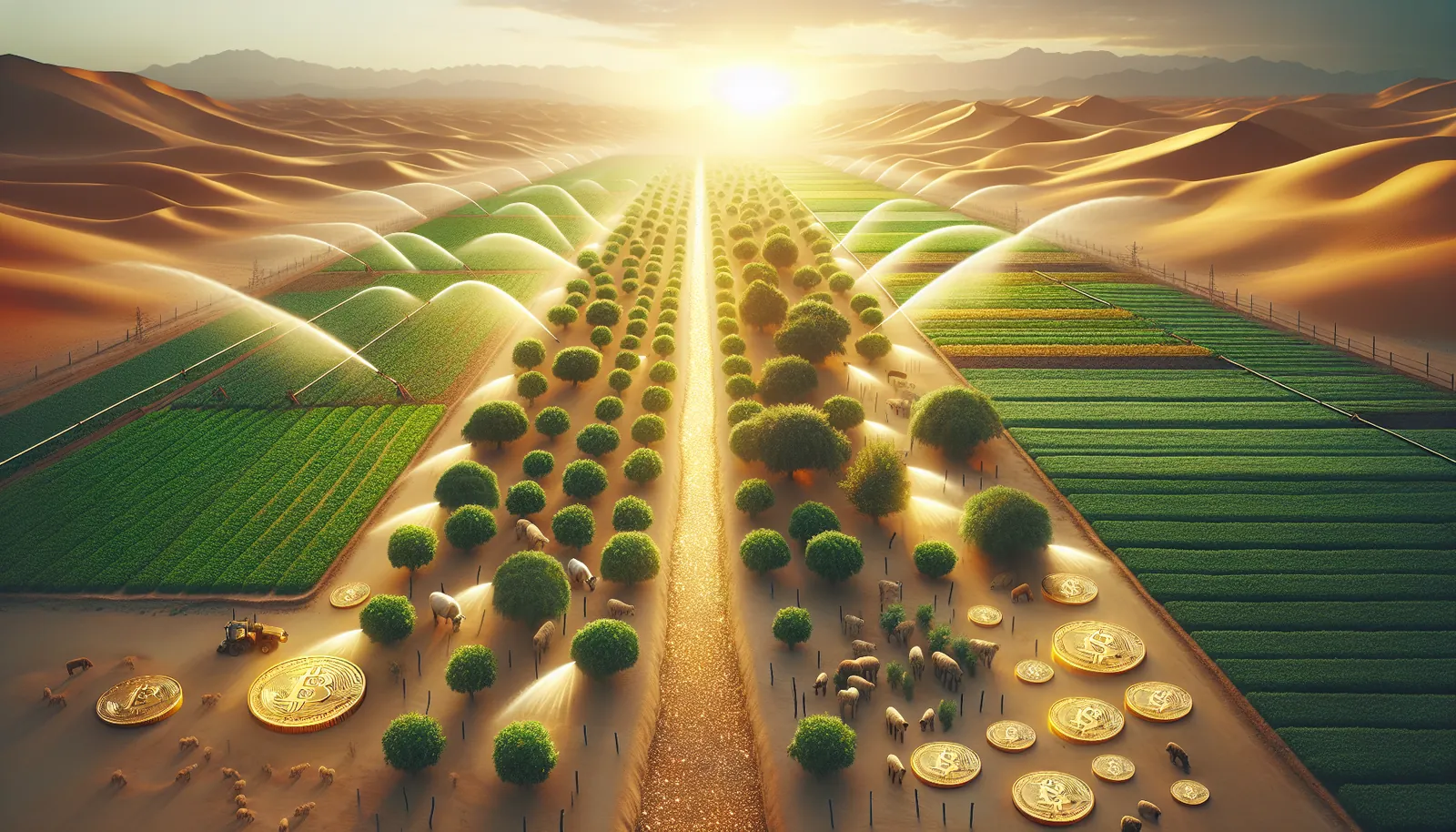
- Planting trees as sadaqah jariyah — perennial fruit and nut trees that feed people for decades
- Reviving land — developing previously unused land into productive agriculture
- Feeding people and animals — crops that feed families, livestock, and wildlife
- Waqf model — an endowed agricultural project that funds charity permanently