What Is Sadaqah Jariyah? The Complete Guide to Ongoing Charity in Islam
UMMA Farm Team
.avif)
Understanding Sadaqah Jariyah: Charity That Never Stops
In Islam, Sadaqah Jariyah (صدقة جارية) is one of the most powerful forms of giving. Unlike regular Sadaqah, which provides immediate benefit, Sadaqah Jariyah is ongoing charity — a contribution that continues to generate reward for the giver as long as people benefit from it.
The Prophet Muhammad ﷺ said: "When a person dies, their deeds come to an end except for three: ongoing charity (Sadaqah Jariyah), beneficial knowledge, or a righteous child who prays for them." (Sahih Muslim)
This hadith establishes Sadaqah Jariyah as one of only three deeds that continue earning reward after death — making it one of the most sought-after forms of giving in the Muslim community.
What Qualifies as Sadaqah Jariyah?
Sadaqah Jariyah is any charitable act whose benefit continues over time. The key distinction is duration of impact: the longer people benefit, the longer the reward continues.
Common examples of Sadaqah Jariyah include:
- Building a water well — provides clean water for years
- Planting trees — produces food and shade for decades
- Building a mosque — serves the community for generations
- Sponsoring education — the knowledge benefits others indefinitely
- Funding agricultural production — a working farm produces food and income continuously
Notice a pattern: the most impactful forms of Sadaqah Jariyah involve productive assets — things that create ongoing value rather than one-time relief.
Sadaqah Jariyah vs Regular Sadaqah: What's the Difference?
Regular Sadaqah is any voluntary charitable act in Islam. It can be as simple as giving money to someone in need, removing an obstacle from a path, or even smiling at your brother or sister. The reward is immediate and specific to the act.
Sadaqah Jariyah is the subset of Sadaqah whose impact and reward continue flowing over time. It's the difference between giving someone a meal (Sadaqah) and building a farm that feeds people for decades (Sadaqah Jariyah).
Both are virtuous. But Sadaqah Jariyah is unique because it keeps generating reward — even after the giver has passed away. This is why Muslims worldwide actively seek out Sadaqah Jariyah opportunities, especially during Ramadan.
Agriculture: The Ultimate Sadaqah Jariyah
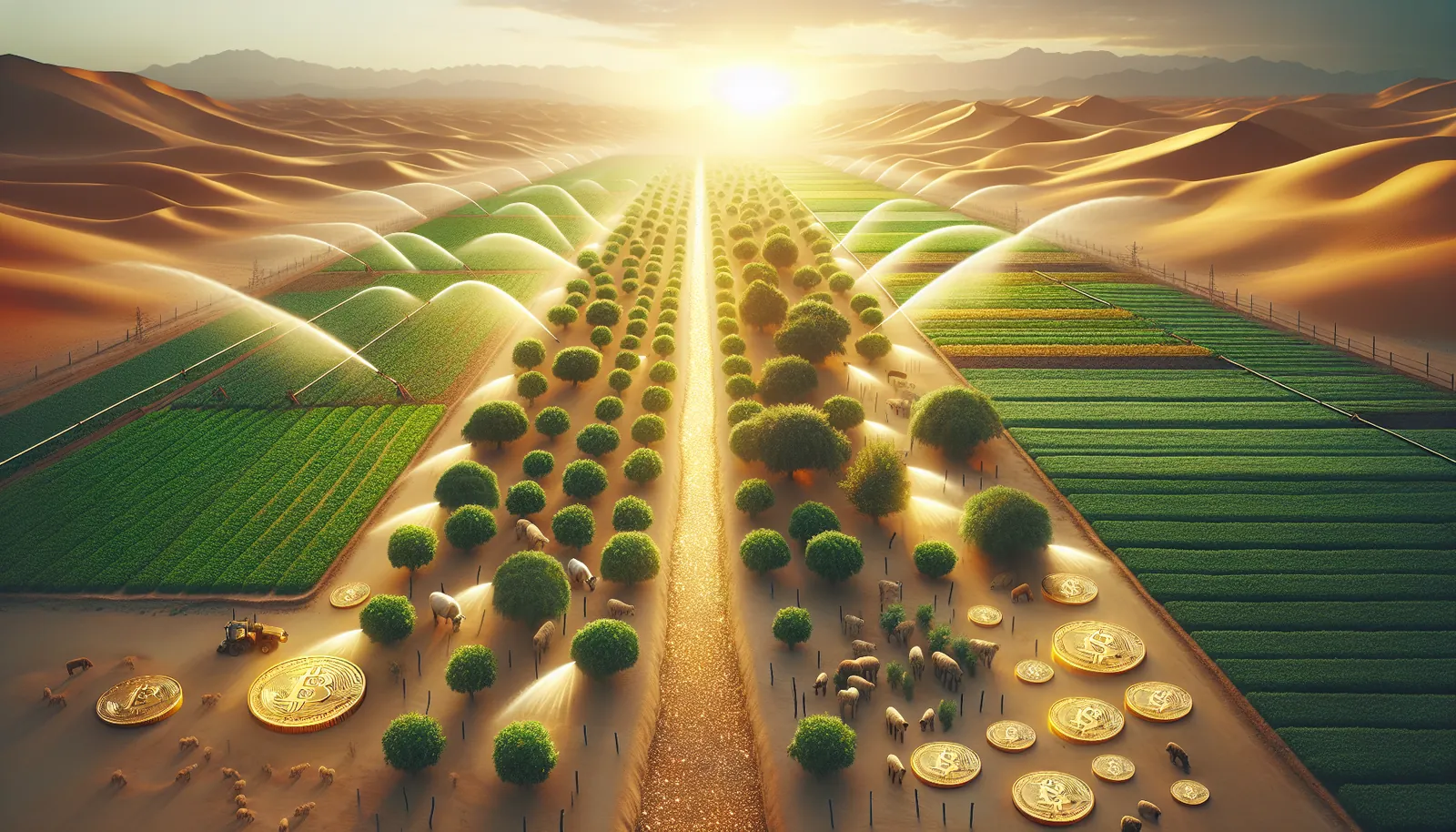
When you plant a tree, it produces fruit for decades. When you establish a livestock unit, it reproduces and feeds families year after year. When you build irrigation infrastructure, it sustains food production for generations.
This is why agriculture is one of the most powerful forms of Sadaqah Jariyah. A single palm tree planted today will produce dates for 60-80 years. A mango tree for 40+ years. A working farm doesn't just feed people once — it creates a permanent system of food production and income generation.
UMMA Farm was built on this principle. Every tree planted, every livestock unit established, and every acre irrigated is designed to be Sadaqah Jariyah — ongoing charity that funds humanitarian relief permanently, not temporarily.
The Prophet ﷺ also said: "If any Muslim plants any plant and a human being or an animal eats of it, he will be rewarded as if he had given that much in charity." (Sahih Bukhari)
How to Give Sadaqah Jariyah Today
If you're looking for Sadaqah Jariyah opportunities, consider the impact timeline:
- Short-term (1-5 years): Livestock programs — animals reproduce and provide food within months
- Medium-term (5-20 years): Feed production and crop systems — Azolla and Alfalfa sustain livestock operations year after year
- Long-term (20-80 years): Perennial tree plantings — palm and mango trees produce food and revenue for decades
- Permanent: Water and irrigation infrastructure — the foundation that makes everything else possible
The longest-lasting Sadaqah Jariyah is one that builds a self-sustaining system — where your contribution keeps producing value without needing to be renewed. That's exactly what agricultural infrastructure provides.
Whether you give during Ramadan, on behalf of a deceased loved one, or simply because you want your charity to keep giving — Sadaqah Jariyah through agriculture ensures your impact compounds over time rather than fading.