What Is Waqf? How Islamic Endowments Built Civilizations — And Can Again
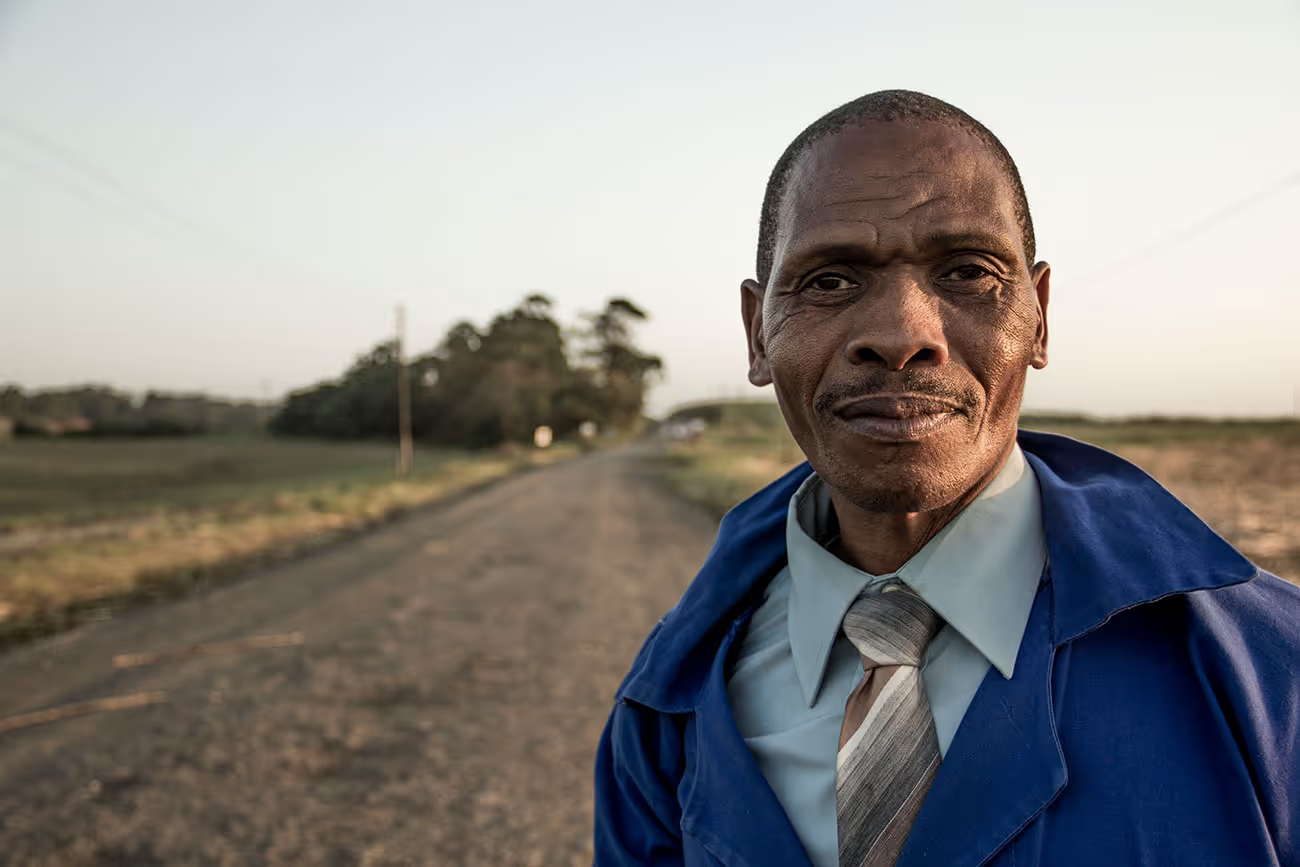
UMMA Farm Team
The Engine of Islamic Civilization
During the golden age of Islam, waqf (plural: awqaf) was the engine that powered public services. Wealthy Muslims would endow property — land, buildings, farms, shops — whose income funded public goods in perpetuity.
At its peak, waqf funded:
- Universities: Al-Azhar in Cairo, the University of al-Qarawiyyin in Fez
- Hospitals: Free healthcare funded by waqf endowments
- Mosques: Not just the buildings, but their operations and staff
- Water systems: Aqueducts, fountains, and wells
- Food programs: Soup kitchens that served the poor daily for centuries
In the Ottoman Empire alone, waqf assets comprised roughly one-third of all productive land.
How Waqf Works
The concept is simple but powerful:
- Step 1: A donor endows a productive asset (land, property, farm)
- Step 2: The asset itself is never sold — it's preserved permanently
- Step 3: Income from the asset funds the designated charitable purpose — forever
Unlike a regular donation that's spent once, a waqf generates income indefinitely. The principal is preserved while the returns do the work.
Why Waqf Declined
Colonialism systematically dismantled waqf systems across the Muslim world. Governments seized waqf land, redirected revenues, and replaced the system with state-controlled services. What took centuries to build was destroyed in decades.
The Revival: Agricultural Waqf
UMMA Farm is modeled on the historical agricultural waqf. Here's how it mirrors the original system:
- Productive asset: Farmland with livestock, trees, and crops
- Permanent preservation: The land and infrastructure are maintained long-term
- Income generation: Agricultural production creates revenue
- Charitable purpose: Revenue funds Umma Foundation's humanitarian programs
This isn't a new idea — it's a return to one of Islam's most powerful charitable institutions.
Be Part of the Revival
Every contribution to UMMA Farm builds a modern waqf — a productive endowment that generates food, revenue, and humanitarian impact for years to come.